

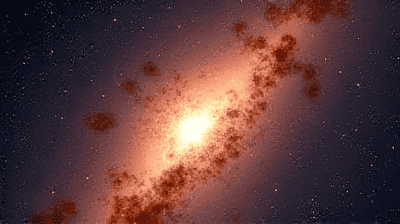
The universe we observe today can be traced back to a moment over 13 billion years ago—a moment known as the Big Bang. This cosmic explosion marked the beginning of space, time, and matter. While the event itself is hidden in the depths of time, the remnants of the Big Bang linger on in the form of the Cosmic Microwave Background (CMB) radiation.
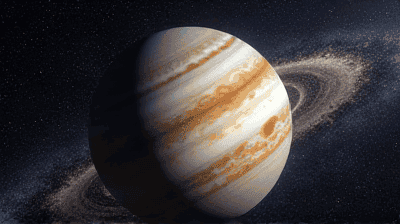
Jupiter, the largest planet in our solar system, has captivated astronomers and space enthusiasts alike for centuries. Its swirling clouds, massive storms, and iconic Great Red Spot present a breathtaking image of a gas giant that has fascinated researchers since the dawn of modern astronomy.
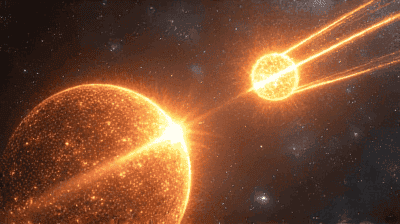
The universe is a vast and mysterious place, home to countless phenomena that challenge our understanding of physics, matter, and the origins of the elements we encounter every day. Among these phenomena are neutron stars, the remnants of massive stars that have undergone supernova explosions.
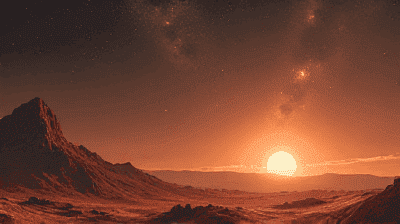
As humanity sets its sights on Mars, the Red Planet presents an exhilarating opportunity for exploration and discovery. The prospect of human missions to Mars captivates the imagination, promising to unlock the secrets of our neighboring planet and potentially usher in a new era of space exploration.
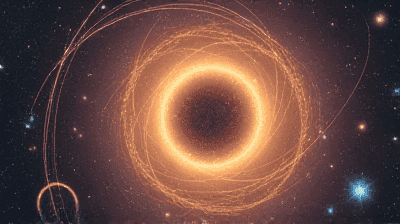
In the vastness of the universe, galaxies are in a dynamic ballet, influenced by the gravitational forces exerted by one another and by unseen structures. One of the most intriguing cosmic phenomena is a gravitational anomaly known as the Great Attractor.
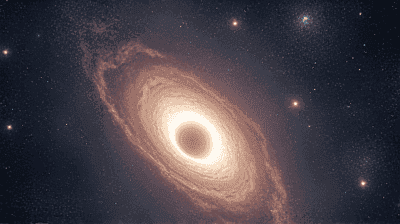
In the realm of theoretical physics and astronomy, the imagination often stretches into the unknown, leading to the development of concepts that challenge our understanding of the universe. Among these fascinating concepts is the idea of white holes, the hypothetical counterparts to black holes.