
DDR5 Penetration Exceeds 80% in 2026 – Profit Elasticity Forecast for Module Makers
By 2026, DDR5 has effectively become the mainstream standard in the global DRAM module market, with penetration surpassing 80% across PCs, servers, and high‑end workstations. This rapid shift reflects both technological necessity—higher bandwidth, improved power efficiency, and greater capacity per DIMM—and a coordinated ecosystem transition involving CPU vendors, motherboard manufacturers, memory chip suppliers, and module makers.
This article examines the profit elasticity dynamics facing module makers in a world where DDR5 dominates. It reviews the drivers behind DDR5’s rapid adoption, identifies the key revenue and cost levers for module manufacturers, explores scenarios for pricing and volume in 2026 and beyond, and outlines strategic actions to enhance earnings resilience as the industry moves deeper into the DDR5 era.
Why DDR5 penetration exceeds 80% in 2026
The transition from DDR4 to DDR5 has moved faster than some earlier generational shifts, thanks to the alignment of technology roadmaps and market demand. On the CPU side, leading x86 and ARM server and client processors launched in 2024–2025 increasingly required or strongly favored DDR5, making new system designs reliant on the newer standard. Meanwhile, hyperscalers and enterprise IT departments demanded higher memory bandwidth per core and greater capacity per socket to support data‑intensive workloads such as analytics, virtualization, and AI‑assisted applications.
DDR5 offers multiple advantages over DDR4: higher effective bandwidth per module, improved power management features, and architectural changes such as on‑DIMM voltage regulation that enable better performance scaling. As new platforms rolled out, system builders optimized for DDR5, and price gaps narrowed as manufacturing scaled, DDR5 rapidly became the default choice. Legacy DDR4 shipments by 2026 are concentrated mainly in replacement, low‑end systems, and specific embedded or industrial niches, making DDR5’s share of new‑build volume comfortably above 80%.
Module makers’ business model in the DDR5 era
DRAM module makers sit at the intersection of chip suppliers and system integrators. They purchase DRAM chips or wafers, perform testing and binning, assemble them into DIMMs or other form factors, and then sell these modules to OEMs, distributors, or end customers. Their value lies in engineering, qualification, brand, logistics, and sometimes customization.
In the DDR5 era, module makers’ cost structure evolves but the basic outline remains. Their main cost components include DRAM chips, PCBs and other materials, manufacturing and test operations, and overhead. Revenue depends on module average selling price (ASP), product mix (e.g., capacity and speed grades), and customer segmentation (enterprise, retail, hyperscaler, niche). Profit elasticity, therefore, emerges from how changes in DDR5 chip pricing, module ASPs, volumes, and mix translate into margin and earnings swings.
Key drivers of profit elasticity for DDR5 modules
Profit elasticity describes how sensitive a firm’s profit is to changes in demand or pricing. For DDR5 module makers, several intertwined factors drive this sensitivity:
- DDR5 chip cost volatility: DRAM chip prices historically exhibit cyclical swings driven by supply–demand balance, capital expenditures, and macroeconomic trends. When chip prices fall, module makers can expand margins if ASPs hold; when chips rise, margins compress unless ASPs can be raised in tandem.
- ASP vs. cost pass‑through: The ability to pass input cost changes through to customers depends on market structure and competition. In tight supply cycles, module makers may raise ASPs quickly; in oversupply, customers exert downward pressure, reducing profit responsiveness.
- Product mix and segmentation: Higher‑capacity and higher‑speed DDR5 modules typically command better margins. Module makers with strong presence in high‑end server or enthusiast segments tend to exhibit greater profit leverage to favorable cycles, but also higher sensitivity to downturns.
- Operating leverage: Fixed costs in production, R&D, and overhead mean that changes in volume can significantly affect profit. High utilization amplifies earnings, while under‑utilization erodes margins even if per‑unit gross margins look acceptable.
- Brand and value‑added services: Firms with strong brands, quality reputations, or offering specialized services (e.g., custom modules, tightly qualified server memory) can maintain premium pricing and lower profit elasticity to commodity DRAM swings.
Impact of >80% DDR5 penetration on pricing dynamics
When DDR5 penetration exceeds 80%, the market shifts from transition mode to maturity. During early adoption, DDR5 often commands significant premiums over DDR4 due to novelty, limited capacity, and high demand for cutting‑edge performance. As adoption becomes mainstream, these premiums narrow, and pricing is driven more by broad supply–demand balance than by generational scarcity.
In 2026, with DDR5 dominant, module makers face a new equilibrium. On the one hand, DDR5’s technical complexity and alignment with high‑value workloads can sustain structurally higher ASPs compared with legacy DDR4. On the other hand, more chip suppliers and module brands compete in the DDR5 space, exerting downward pressure on prices. The net result is often moderate margin uplift compared with late‑cycle DDR4, but with renewed sensitivity to classical DRAM price cycles, especially in commoditized segments such as mainstream PC memory.
For profit elasticity, this means that module makers are less protected by generational premiums and more exposed to volume and mix management. The days when simply being early to DDR5 guaranteed strong margins are gone; the focus shifts to positioning within DDR5 segments that offer more stable or structurally higher ASPs.
Server vs client DDR5: different elasticity profiles
DDR5 penetration is not uniform across segments, and profit elasticity differs accordingly. Server and data‑center DDR5 modules typically carry higher ASPs and tighter quality and reliability requirements. Customers in these segments are less price‑sensitive than retail consumers, valuing performance and reliability over minimal cost.
For module makers, server DDR5 modules can provide strong profit leverage: small changes in price or mix substantially impact margins. However, these segments also involve longer qualification cycles and higher expectations, which can stabilize volumes and reduce extreme swings. Profit elasticity here is high but tempered by contractual and relationship‑driven dynamics.
Client DDR5 modules—for desktops, laptops, and consumer systems—experience more direct price competition, shorter product cycles, and greater responsiveness to promotional activity. Profit elasticity in these segments is often higher in the short term, as ASP changes quickly propagate to earnings. However, margins are thinner on average, limiting the absolute profit swing relative to enterprise segments.
Elasticity across capacity and speed grades

Within DDR5, module capacity (e.g., 8 GB, 16 GB, 32 GB, 64 GB) and speed grade (e.g., 4800 MT/s vs higher frequencies) influence elasticity. High‑capacity, high‑speed modules rely on more DRAM chips per DIMM and stricter binning, increasing cost but also enabling premium pricing. In tight demand cycles, these modules can deliver outsized margin and profit growth, as customers pay for performance and capacity at high rates.
Conversely, in downcycles, demand for top‑tier modules can soften disproportionately, as customers trade down to lower capacity or speed to save costs. Module makers heavily tilted toward high‑end offerings may therefore see more volatile profit, while those with balanced portfolios can dampen swings. In 2026, with DDR5 widely deployed, many module makers will adjust portfolios to maintain a mix that optimizes elasticity: enough high‑end exposure to benefit from upcycles, but sufficient mainstream products to smooth earnings in downcycles.
Profit elasticity also depends on how easily customers can switch between grades. In some enterprise environments, specifications are locked for validation and support reasons, making downgrades less likely. This stabilizes high‑end module demand and reduces elasticity. In consumer channels, where specification changes are easy, elasticity remains high because demand shifts quickly in response to price differentials.
Cost side: manufacturing efficiency and test complexity
On the cost side, DDR5 introduces new engineering and manufacturing complexities that can affect elasticity. On‑DIMM power management, more complex PCB layouts, and stricter signal integrity requirements increase design and manufacturing overhead. At the same time, as processes mature, yields improve and module makers refine their operations, bringing per‑unit costs down.
Profit elasticity is influenced by how efficiently module makers manage these factors. Those that achieve high yields, efficient test flows, and robust automation can maintain cost stability across cycles, making profits more responsive to ASP changes. Those with less optimized processes may see costs rise unexpectedly when they ramp volumes or introduce new designs, dampening positive elasticity in upcycles and exacerbating margin compression in downcycles.
DDR5’s complexity also encourages greater differentiation in quality and feature sets. Premium modules with advanced heat‑spreaders, RGB features, or special tuning can justify higher prices but require more engineering and quality control. The incremental cost and demand variability associated with these features further shapes elasticity: profitable in enthusiastic segments, but potentially volatile overall.
Scenario analysis: profit elasticity under different 2026–2027 market conditions
To appreciate how profit elasticity plays out, consider several simplified scenarios in the 2026–2027 timeframe when DDR5 penetration is above 80%:
- Strong demand, balanced supply: AI, enterprise, and client demand for DDR5 modules remains robust, and supply expansions keep up without significant overshoot. DRAM chip prices are stable to modestly rising, and module ASPs reflect sustained value. Profit elasticity is positive and moderate: earnings grow strongly, but margins do not spike uncontrollably.
- Demand surge, constrained supply: A wave of platform upgrades or AI deployments pushes demand higher than expected, while supply is limited by manufacturing bottlenecks. Chip prices rise sharply, and module ASPs follow, especially in high‑end segments. Profit elasticity is high; module makers with capacity and customer access experience significant profit expansion as price increases outpace cost growth.
- Demand normalization, oversupply: After a period of heavy investment, demand slows while new capacity keeps coming online. DRAM prices fall, and module ASPs compress due to intense competition. Profit elasticity here is negative; module makers see earnings decline disproportionately unless they cut costs and differentiate offerings effectively.
- Segmented demand, mixed pricing: Enterprise and AI segments remain strong, but consumer demand softens due to macroeconomic factors. Server DDR5 ASPs and volumes stay healthy, while client modules see discounts and promotions. Module makers with diversified exposure experience moderate elasticity: earnings from enterprise partly offset consumer weakness, leading to less extreme profit swings.
These scenarios illustrate that profit elasticity is less about DDR5 penetration per se and more about how module makers position themselves within the DDR5 ecosystem.
Strategies for module makers to manage and leverage elasticity
With DDR5 firmly established by 2026, module makers must adopt strategies that manage risk while exploiting profit elasticity opportunities.
First, diversification across segments and customers is crucial. Balancing exposure between enterprise, cloud, OEM, and retail channels reduces dependence on any single cycle. Module makers that serve both high‑end server and mainstream PC markets can smooth profit volatility by leaning on whichever segment is stronger at a given time.
Second, portfolio management within DDR5 is key. Offering a range of capacities and speed grades, including value‑oriented and premium lines, permits dynamic mix adjustment. In strong cycles, marketing and sales can push higher‑margin offerings; in weaker cycles, more value segments can be emphasized to sustain volumes and cover fixed costs.
Third, cost discipline and process optimization remain foundational. Investing in manufacturing automation, yield improvement, and efficient test methodologies helps keep costs predictable and low, thereby increasing profit elasticity in favorable pricing environments. Such investments also mitigate damage during downcycles by reducing break‑even volumes.
Fourth, differentiation via brand, reliability, and services can lower elasticity to commodity price swings. Certified server memory, extended warranties, custom configurations, and trusted support make customers more willing to pay consistent premiums even when commodity prices fluctuate. This steadiness stabilizes margins and makes profit less sensitive to spot price moves.
Finally, strategic partnerships with DRAM chip suppliers and OEMs can improve visibility and allocation. Long‑term supply agreements and joint planning reduce uncertainty in input costs and volumes, allowing module makers to plan production and pricing more effectively. This reduces sudden shocks to profit and supports more predictable elasticity.
Implications for investors and ecosystem partners
For investors, understanding profit elasticity in the DDR5 module space informs valuation and risk assessment. Companies with high exposure to cyclical segments and limited differentiation may exhibit strong earnings swings, appealing for short‑term opportunities but risky for long‑term stability. Firms with balanced portfolios, strong enterprise presence, and efficient operations offer more stable profit profiles even as DDR5 cycles unfold.
Ecosystem partners—CPUs vendors, OEMs, and distributors—also benefit from recognizing module makers’ elasticity dynamics. Collaborative planning on platform introductions, memory configurations, and promotional activities can smooth demand curves and reduce extreme pricing volatility. In turn, this helps maintain a healthier supply chain and more reliable provisioning of DDR5 modules across markets.
As DDR5 continues to dominate beyond 2026 and future standards emerge, the lessons learned from profit elasticity in this phase will influence how module makers prepare for subsequent transitions. The ability to manage elasticity—rather than merely ride cycles—will distinguish resilient, high‑quality players from fragile, highly speculative ones.
Conclusion: DDR5 maturity and the new profit elasticity regime
With DDR5 penetration exceeding 80% in 2026, the DRAM module industry has entered a new maturity phase. The technology’s advantages are broadly acknowledged, and its use is widespread across servers, PCs, and high‑end systems. Yet this maturity does not eliminate cyclicality or profit sensitivity; instead, it reshapes profit elasticity around DDR5‑specific dynamics—segment mix, capacity and speed grades, supply–demand balance, and operational efficiency.
Module makers that understand and actively manage this elasticity can turn DDR5’s dominance into a strategic asset rather than a source of uncontrolled volatility. Through diversification, portfolio optimization, cost discipline, differentiation, and partnerships, they can build earnings profiles that both capture upside in strong cycles and remain resilient when conditions soften. For the broader memory ecosystem, DDR5’s high penetration and the profit elasticity it brings will define the competitive landscape through the mid‑2020s and set the stage for how future memory standards are adopted and monetized.
You May Like

Narrowing Spread Between NAND Spot and Contract Prices in 2026 – A Signal
By 2026, one of the most watched metrics in the NAND flash market has started to shift in a subtle but meaningful way: the spread between spot prices and long‑term contract prices is narrowing. For casual observers, this may look like just another incremental change in a notoriously volatile industry. For memory makers, module houses, device OEMs, and data center buyers, however, a tightening gap between spot and contract prices is a signal—a reflection of evolving supply–demand balance, risk perceptions, and strategic behavior on both sides of the market.

Price Divergence Trading Strategies Between NAND Flash and DRAM ETFs
NAND flash and DRAM sit at the core of AI storage and computing power. Both are memory, but they are not the same business. DRAM is main memory—fast, volatile, and central to high‑bandwidth workloads like AI training and inference. NAND is non‑volatile storage—slower than DRAM, but crucial to persistent data and large‑scale object storage. The cycles that drive their pricing and margins overlap, yet they often diverge. That divergence is where trading strategies between NAND and DRAM ETFs become interesting.

China’s HBM Localization Progress: The Catch-Up Pace of CXMT and XMC
China’s drive to localize advanced memory technologies has accelerated over the past several years. High-Bandwidth Memory (HBM) sits near the center of that strategy because it is integral to AI accelerators, high-performance computing (HPC) and other strategic compute platforms. Two domestic players—ChangXin Memory Technologies (CXMT) and XMC (Xianghui Memory, commonly referred to as XMC)—have become focal points in assessing how quickly China can close the gap with international incumbents on HBM die, stacking, and packaging.

Thermal Simulation Challenges and Solutions in 3DIC AI Chip Design
As AI workloads push chips to deliver ever higher compute density, designers are increasingly turning to three‑dimensional integration (3DIC) to stack dies vertically and pack more functionality into limited footprints. While 3DIC architectures unlock significant performance and bandwidth advantages, they also introduce complex thermal behaviors that are far harder to predict and manage than in traditional 2D layouts.

An Attempt at Compiling a Memory+Compute Fusion Thematic Index – A Dual-Track Framework
Most AI investors talk about “compute” as if it were the whole story: GPUs, accelerators, chips, cores. But every one of those cores needs somewhere to read from and write to. Memory and storage define how wide the data highway really is. In practice, AI performance is a fusion of compute and memory, not a solo act. So why do so many indices and ETFs separate them into different silos—one for semiconductors, one for memory, one for data centers—when the actual workloads keep blending them?
Surging Demand for Laser Drilling and Plasma Dicing Equipment in Advanced Packaging
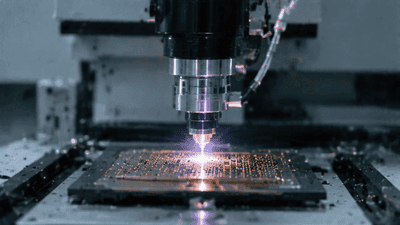
Advanced packaging has become one of the semiconductor industry’s most important growth engines, and it is now pulling a surprising set of process tools into the spotlight. Among the most in-demand are laser drilling and plasma dicing equipment. These machines sit close to the heart of heterogeneous integration, fan-out packaging, wafer thinning, TSV formation, glass substrate processing, and other advanced flows where precision, yield, and throughput matter enormously. As packaging moves from a back-end afterthought to a strategic platform, the equipment used to shape, open, and separate materials has become just as important as the dies themselves.
D2D Interface Bandwidth and Latency Comparison in Chiplet Architectures
Chiplet architecture has turned the package into a real performance battleground. Once multiple dies are placed side by side or stacked within the same advanced package, the quality of the die-to-die, or D2D, interface becomes one of the most important determinants of system behavior. Bandwidth is no longer a nice-to-have metric, and latency is no longer a small implementation detail. Together, they shape whether a chiplet system feels nearly monolithic or frustratingly fragmented.

Stock Selection Logic and Alpha Validation of ESG-Themed Semi ETFs
Semiconductor themed ETFs are no longer just about growth and cycles. A growing subset now layers environmental, social, and governance (ESG) criteria on top of traditional sector exposure. These ESG semi ETFs promise two things at once: access to one of the market’s most powerful secular themes, and alignment with sustainability and governance standards. The pitch is appealing, but it raises two hard questions. First, how exactly are these stocks being selected? Second, does the ESG overlay help, hurt, or leave alpha unchanged?