
2H 2026 Memory Price Outlook: A Summary of Institutional Forecasts
The second half of 2026 is shaping up to be one of the most consequential periods for global memory pricing in more than a decade. Institutional forecasters across investment banks, research firms, and market trackers broadly agree that both DRAM and NAND are in the midst of a sharp upcycle, driven by structural undersupply and aggressive demand from AI servers and high‑end devices. Where they differ is in how long the rally can run, how steep the quarter‑on‑quarter increases will be, and when normalization might begin.
This blog post summarizes those institutional forecasts, highlights areas of consensus and disagreement, and discusses what their combined outlook implies for memory makers, OEMs, and end users in 2H 2026.
Macro backdrop: shortages and AI demand
Most institutional reports frame the 2H 2026 outlook against a clear macro backdrop: AI‑driven demand continues to outstrip conservative supply growth in both DRAM and NAND. Several analysts note that producers have added little new wafer capacity in recent years, preferring to upgrade technology rather than expand sheer volume, leaving the industry structurally tight as AI servers consume disproportionate shares of high‑end memory.
Research houses and banks repeatedly emphasize that this imbalance is not limited to niche products like HBM; it spills over into conventional DRAM and NAND, as capacity and capex are carved up to support AI‑centric products first. Consumer and PC segments are therefore left to compete for constrained residual supply, reinforcing the upward pressure on prices into the second half of the year.
UBS: strong contract price hikes, extended undersupply

UBS’s July “Memory Monthly” report is among the more detailed institutional forecasts for 2H 2026. The firm cites record global memory monthly sales—up more than 30% month‑on‑month and above long‑term seasonal averages—as evidence of a robust pricing and demand environment.
On pricing, UBS now models DRAM contract prices to rise about 32% quarter‑on‑quarter in Q3 2026 and a further 18% QoQ in Q4 2026, while NAND prices are projected to increase about 30% and 12% QoQ over the same periods. The bank argues that DRAM will remain structurally undersupplied through at least mid‑2028, pointing to bit demand growth in 2027 far exceeding supply growth, and projects memory industry revenues approaching $1 trillion in 2026 and climbing sharply thereafter.
Jefferies: more aggressive near‑term surge
Jefferies takes an even more aggressive stance on the immediate trajectory. In its equity research outlook, the firm warns that memory chip prices could jump 40–50% in Q3 2026 compared with Q2, followed by a further 30–40% rise in Q4 2026. The drivers it cites are limited production growth, firm decisions by manufacturers to avoid major capacity additions, and intense demand from cloud and AI customers locking in long‑term contracts.
Jefferies expects this favorable environment for memory makers to persist into at least 2027, but also cautions that a sharp correction could occur in 2028 if wafer capacity finally expands at a double‑digit rate while AI demand growth slows, setting up the next downcycle.
Gartner and IDC: structural tightness and downstream impact
On the industry research side, firms such as Gartner and IDC underline that 2H 2026 price increases are not just a short‑term spike but part of a broader cost shock for downstream devices. Gartner estimates that combined DRAM and SSD prices could surge by around 130% by the end of 2026, translating into roughly high‑teens percent increases in average PC prices and similar upward pressure on smartphone BOMs.
IDC, meanwhile, projects 2026 DRAM and NAND supply growth in the mid‑teens percentage range, which it characterizes as below historical norms given demand trajectories. With supply growth lagging, IDC suggests that elevated contract prices and persistent shortages will remain a defining feature through the second half, particularly in higher‑capacity configurations.
TrendForce: AI servers prioritize capacity, squeezing consumers
TrendForce’s 2Q26 forecast, widely referenced by institutions, emphasizes the way AI server demand reshapes capacity allocation. It reports that cloud service providers are securing production via long‑term agreements and prioritizing server memory, which heavily restricts supply to consumer PCs, smartphones, and other devices.
The firm expects “severe shortages” to drive continuous contract price hikes across DRAM and NAND, with AI server demand sustaining DRAM’s price rally and competitive capacity carve‑outs pushing NAND prices higher as well. For 2H 2026, TrendForce anticipates that this combination will keep prices on an upward trajectory, even as some consumer demand softens under the weight of higher BOM costs.
Bernstein: near‑term bullish, longer‑term more cautious

Bernstein broadly agrees with UBS and others on the near‑term direction of prices, flagging major contract price increases for DRAM and NAND in the second quarter of 2026 and acknowledging that the uptrend continues into the second half. However, its tone is more cautious regarding how long and how high the rally can extend.
The firm warns that eventual “demand destruction” in consumer segments is likely if prices keep rising, and argues that the pace of increases should begin to narrow notably as 3Q 2026 progresses. Its models put the peak of the cycle closer in time, projecting that memory prices will gradually top out and start normalizing from the second half of 2027 into 2028, even if structural AI demand remains strong.
Other analyst commentary: continued hikes, eventual relief
Additional sell‑side commentary reinforces the picture of continued DRAM and NAND price hikes through all of 2026. Some researchers note that negotiations for full‑year HBM and conventional DRAM volumes are largely complete and locked in at elevated levels, with suppliers expecting double‑digit quarter‑on‑quarter price increases throughout the year as supply continues to lag.
Analysts also stress that the supply‑demand gap is likely to improve somewhat in 2027, especially for DRAM, but to remain tight for NAND, implying that while price increases may moderate, a rapid return to the depressed pricing of past downcycles appears unlikely before the next major capacity expansion wave.
Areas of consensus
Despite differences in tone and precise numbers, institutional forecasts for 2H 2026 share several key points of consensus. First, virtually all major houses expect DRAM and NAND contract prices to rise further in the second half, with double‑digit quarter‑on‑quarter increases considered the base case rather than an outlier.
Second, it is broadly agreed that AI and cloud demand are the primary engine of this rally, not traditional PC or handset cycles. Producers are channeling capacity into high‑margin server and accelerator products, and that prioritization is what tightens availability and raises prices downstream.
Third, institutions concur that limited new wafer capacity—combined with deliberate supply discipline after years of volatile cycles—is helping sustain elevated prices longer than in past upturns, even as device makers and end users begin to feel the strain.
Key disagreements and scenario risks
Where forecasts diverge most is around the duration and eventual amplitude of the price rally. UBS and Jefferies sketch scenarios of extended undersupply and multi‑year pricing strength, suggesting that current 2H 2026 increases are part of a longer arc that reaches into 2027 or beyond.
Bernstein and some market commentators, by contrast, stress demand‑side risks: if consumer and lower‑tier enterprise segments cut capacity or delay upgrades in response to rising costs, the rally could lose momentum sooner than the most bullish models imply, leading to a plateau or even early normalization. There is also uncertainty about the timing and scale of future capacity additions; a faster‑than‑expected expansion in 2027–2028 could flip the cycle more abruptly.
Implications for memory makers
For memory manufacturers, institutional forecasts point to a rare window of strong pricing power in 2H 2026. Contract negotiations can be structured around constrained supply and growing AI commitments, allowing producers to push through higher prices and prioritize more profitable segments.
At the same time, the more cautious forecasts remind suppliers that over‑expansion or over‑reliance on short‑term price spikes carries risk. If consumer demand weakens or capacity expansions arrive earlier than expected, the cycle could roll over quickly, making disciplined investment and balanced segment exposure essential.
Implications for OEMs and device makers
OEMs building PCs, smartphones, and other devices face a challenging 2H 2026 environment. Higher DRAM and NAND prices threaten margins and force difficult choices around capacity configurations, end‑product pricing, and feature sets. Several institutional reports explicitly forecast higher PC and handset prices by late 2026 due to surging memory costs.
Device makers may respond by trimming standard memory configurations, re‑segmenting product lines, or passing part of the cost increase to consumers. Longer‑term supply contracts, diversified sourcing, and timing purchases around cycle signals become more important to mitigate volatility and protect profitability.
Implications for cloud and AI customers
Cloud providers and AI firms are central to the current cycle and are both beneficiaries and victims of higher memory pricing. On one hand, their demand is strong enough that they can secure capacity via long‑term agreements, ensuring continuity for critical training and inference workloads.
On the other hand, rising DRAM, HBM, and NAND costs feed directly into the economics of AI clusters, pushing up hardware spending and potentially influencing pricing for AI services. Institutions generally expect these customers to continue accepting higher memory prices through 2H 2026, but some warn that cost pressures could eventually force more careful workload prioritization or architectural changes.
What to watch in the second half of 2026
Given the range of institutional forecasts, several indicators will be important to watch as 2H 2026 unfolds. First is the trajectory of contract and spot prices across key DRAM and NAND categories, which will show whether the more aggressive or more moderate forecasts are playing out.
Second is evidence of demand adjustments: changes in PC and smartphone capacity configurations, AI server deployment pacing, and cloud capex guidance will reveal how end markets are digesting higher memory costs. Third is any new information on capacity additions, capex plans, or policy shifts that could alter the supply outlook in 2027–2028, setting the stage for the next turn in the cycle.
Conclusion: a rare synchronized bullish phase, with caveats
Institutional forecasts for the 2H 2026 memory price outlook collectively describe a rare period in which most major observers are simultaneously bullish on DRAM and NAND pricing, backed by structural supply constraints and extraordinary AI demand.
Yet beneath that consensus lie important caveats about eventual demand elasticity, future capacity expansions, and the timing of normalization. For now, the second half of 2026 looks set to deliver continued price strength and margin support for memory makers, but all participants in the ecosystem—suppliers, OEMs, cloud providers, and investors—must prepare for the inevitable next phase when today’s tightness gives way to a new balance, and the cycle turns once again.
You May Like

Narrowing Spread Between NAND Spot and Contract Prices in 2026 – A Signal
By 2026, one of the most watched metrics in the NAND flash market has started to shift in a subtle but meaningful way: the spread between spot prices and long‑term contract prices is narrowing. For casual observers, this may look like just another incremental change in a notoriously volatile industry. For memory makers, module houses, device OEMs, and data center buyers, however, a tightening gap between spot and contract prices is a signal—a reflection of evolving supply–demand balance, risk perceptions, and strategic behavior on both sides of the market.

Price Divergence Trading Strategies Between NAND Flash and DRAM ETFs
NAND flash and DRAM sit at the core of AI storage and computing power. Both are memory, but they are not the same business. DRAM is main memory—fast, volatile, and central to high‑bandwidth workloads like AI training and inference. NAND is non‑volatile storage—slower than DRAM, but crucial to persistent data and large‑scale object storage. The cycles that drive their pricing and margins overlap, yet they often diverge. That divergence is where trading strategies between NAND and DRAM ETFs become interesting.

China’s HBM Localization Progress: The Catch-Up Pace of CXMT and XMC
China’s drive to localize advanced memory technologies has accelerated over the past several years. High-Bandwidth Memory (HBM) sits near the center of that strategy because it is integral to AI accelerators, high-performance computing (HPC) and other strategic compute platforms. Two domestic players—ChangXin Memory Technologies (CXMT) and XMC (Xianghui Memory, commonly referred to as XMC)—have become focal points in assessing how quickly China can close the gap with international incumbents on HBM die, stacking, and packaging.
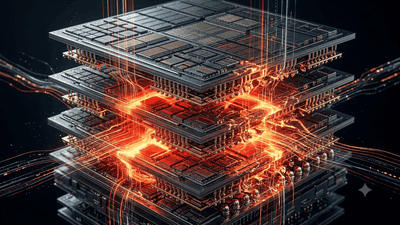
Thermal Simulation Challenges and Solutions in 3DIC AI Chip Design
As AI workloads push chips to deliver ever higher compute density, designers are increasingly turning to three‑dimensional integration (3DIC) to stack dies vertically and pack more functionality into limited footprints. While 3DIC architectures unlock significant performance and bandwidth advantages, they also introduce complex thermal behaviors that are far harder to predict and manage than in traditional 2D layouts.
An Attempt at Compiling a Memory+Compute Fusion Thematic Index – A Dual-Track Framework
Most AI investors talk about “compute” as if it were the whole story: GPUs, accelerators, chips, cores. But every one of those cores needs somewhere to read from and write to. Memory and storage define how wide the data highway really is. In practice, AI performance is a fusion of compute and memory, not a solo act. So why do so many indices and ETFs separate them into different silos—one for semiconductors, one for memory, one for data centers—when the actual workloads keep blending them?
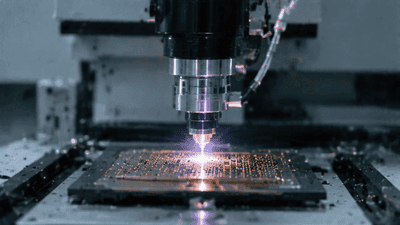
Surging Demand for Laser Drilling and Plasma Dicing Equipment in Advanced Packaging
Advanced packaging has become one of the semiconductor industry’s most important growth engines, and it is now pulling a surprising set of process tools into the spotlight. Among the most in-demand are laser drilling and plasma dicing equipment. These machines sit close to the heart of heterogeneous integration, fan-out packaging, wafer thinning, TSV formation, glass substrate processing, and other advanced flows where precision, yield, and throughput matter enormously. As packaging moves from a back-end afterthought to a strategic platform, the equipment used to shape, open, and separate materials has become just as important as the dies themselves.
D2D Interface Bandwidth and Latency Comparison in Chiplet Architectures
Chiplet architecture has turned the package into a real performance battleground. Once multiple dies are placed side by side or stacked within the same advanced package, the quality of the die-to-die, or D2D, interface becomes one of the most important determinants of system behavior. Bandwidth is no longer a nice-to-have metric, and latency is no longer a small implementation detail. Together, they shape whether a chiplet system feels nearly monolithic or frustratingly fragmented.

Stock Selection Logic and Alpha Validation of ESG-Themed Semi ETFs
Semiconductor themed ETFs are no longer just about growth and cycles. A growing subset now layers environmental, social, and governance (ESG) criteria on top of traditional sector exposure. These ESG semi ETFs promise two things at once: access to one of the market’s most powerful secular themes, and alignment with sustainability and governance standards. The pitch is appealing, but it raises two hard questions. First, how exactly are these stocks being selected? Second, does the ESG overlay help, hurt, or leave alpha unchanged?